And So I Die Again
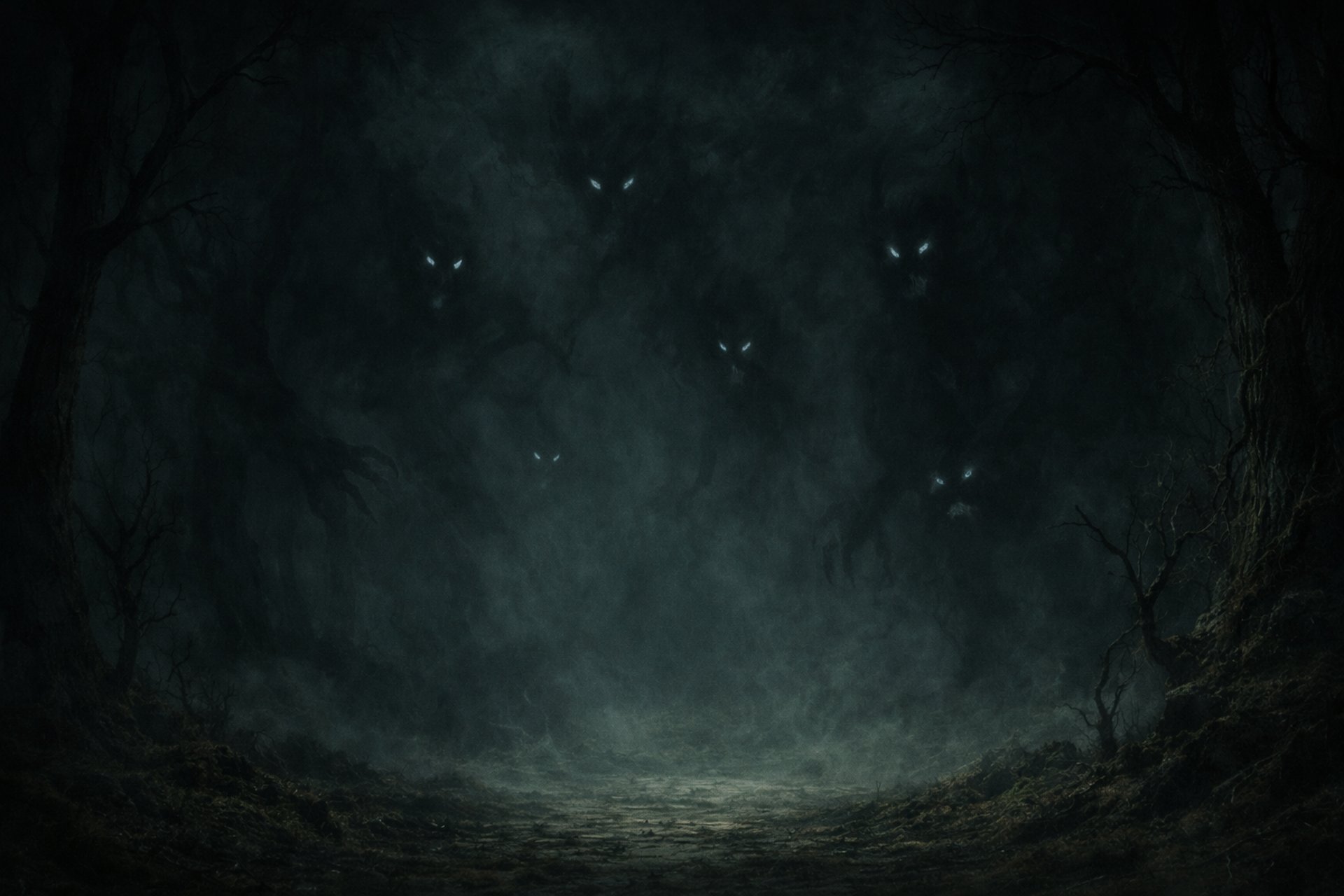
He dies, and wakes again. The same bed, the same ceiling, the same silence. Hundreds of deaths, each one sharper than the last, each one a reminder of what he cannot escape. This is no fiery Hell. It is a prison of memory, where every regret returns to haunt him: the friend left unheard, the girl turned away, the small cruelties that became unbearable echoes. And So I Die Again is a story of guilt, penance, and repetition, where the true torment is not the dying but the remembering.
SHORT STORIES
It’s a strange thing, death. Stranger still when you're made to live it, over and over again. You’d think the pain would blunt with repetition. It doesn’t. If anything, it sharpens. Grows teeth. Every death now carries a texture. The body remembers its own betrayal. Each is a reverse communion—a final supper where silence is the only dish.
I’ve learned their flavours the way a sommelier knows the sting of a grape. Some come hot and sudden. Others creep in cold. But they all end the same way: silence.
I don’t know if anyone will ever read this.
Maybe I’m writing for no one.
Maybe I’m whispering into the void, hoping it answers in a voice that isn’t my own.
Maybe I’m praying to a God who turned away long ago, tired of watching me repeat the same end like a skipping stone running out of water.
Or maybe I’m just writing to myself—carving thoughts into the dark, trying to give shape to the silence. Pretending someone might be listening, even if it’s only a ghost of my own creation.
After all, there is comfort in ritual. In shaping pain into language. Like bleeding in lines, measured and precise.
I tell myself it matters. That there’s meaning buried somewhere in all this death, like a thread woven through ruin. That it isn’t just suffering for its own sake, but a way to remember. Because memory is all I have left.
I treat each like something sacred.
Each regret—for regret holds dominion—preserved and sealed in glass, held aloft like holy fragments in a chapel no one visits but me.
Time does not pass there. It accumulates.
Dust thickens like ash. The air hangs heavy with absence.
Still, I return.
Still, I remember.
…But even sanctity can't hold back what's coming.
I didn’t count them at first. I thought it was a dream. A night terror. Some desperate trick of a mind tearing at its own seams.
The first death came like you'd expect: loud, chaotic, full of clawing. I choked on the weight of my own breath. Fought the stillness. Gasped like a man sinking into quicksand. And when it took me, I believed I was gone.
But then I woke. And died again. And again. And again.
Somewhere around the sixtieth death, the fear stopped screaming. It didn’t leave. It just curled inside me like a sleeping animal, twitching now and then in its dreams. That’s when I began to notice the details.
Like watching my own end play out on a stage, I’ve learned the rhythm of my dying.
It starts with a stutter in the breath, a subtle shortening. The lungs grow cautious, pulling air like a drowning man trying to draw breath through a straw.
Then the fingers go. First, the left. Then the right. As if my body is quietly excusing itself, limb by limb.
The machines hum their cold lullabies. One monitor rises half a note, a soft mechanical gasp, as though it too has seen this before.
Light cuts through the blinds at the same angle each death, laying a narrow cross across my foot, solemn and precise, like a priest anointing the condemned.
I started keeping count.
Not on paper.
Not on skin.
Just inside, etched into the mind, like tally marks carved into stone by some forgotten prisoner.
Today is death number four hundred eighty-eight.
This isn’t Hell, not in the biblical sense.
There is no fire, no sulphur, no demons dragging claws down my back.
Just this room.
Just these lights.
Just this body, folding inward under the same flickering fluorescence.
The collapse comes in stages.
The legs go first, heavy as sandbags soaked in saltwater.
Vision narrows. Edges fade. The world dissolves into a soft grey hush.
Inside, the kidneys are the first to surrender—silent and bitter, like old lovers turning their backs.
I feel the poison rising, curling through the blood in slow, black spirals.
The liver follows, melting quietly into failure.
My mouth floods with copper. My skin begins to itch from beneath, as though the body can sense its own betrayal.
And then, as my heart gives one final, stubborn beat. One single flare of defiance. Nothing...
No dreams. No colour. No voice from the other side.
Only… stillness.
Like the last breath of a cathedral once the choir has gone.
Then I wake.
Same bed. Same room.
The same ceiling, pale and cracked, its fractures branching like veins through a corpse.
And still no answers.
Sometimes I scream, just to test the edges of this reality. No one comes.
Sometimes I close my eyes and refuse the light, try to will myself out of the cycle. It doesn’t matter.
Death arrives anyway, punctual, patient, and… Inevitable.
But the worst part isn’t the dying.
It’s the remembering.
The way the mind turns inward, slow and serpentine, circling itself like a snake winding toward the strike. There's no comfort in it. No forgetting. No mercy in the return.
Every cycle begins with the same question.
Was I truly that bad?
I don’t ask it like a penitent. There’s no prayer in the asking.
I press it like a thumb into a bruise, just to feel what still hurts.
And when no answer comes—because none ever do—I begin the inventory. I watch the stage anew as an audience of one, cataloguing a lifetime of my deeds, actions, and stains.
The kind that don’t wash out but rather sink deeper with time.
I remember the lies I spun, beautiful enough to pass for kindness.
Recount the quiet manipulations, so gentle they felt like mercy to the ones I used.
Reawaken the indifference I wore like armour, burnished by repetition.
I think of the people I stepped over, not with cruelty, but with absence.
The ones I silenced with my silence.
The ones who reached for me, hands trembling, voices cracking…
And how I turned away.
Not because I couldn’t help.
Not because I didn’t have the means.
But because I could.
There was a man once. I ended his career with a lie as simple as a breath. One whispered untruth in a crowded room, and I watched him fold from a distance like scaffolding giving way, as if the structure had always known it was temporary. I told myself it was evolution. The strong survive, the weak collapse. But that wasn’t quite right, was it? He wasn’t weak. He was inattentive. He trusted the silence too much. Trusted that what he’d built could outlast the whisper. Trusted, perhaps, that people were good.
He didn’t even see it coming. That’s what stays with me. Not the act, not the ruin, but the calm in him before it all began to fall.
Then there was a friend. Not a close friend—someone I’d known for a couple of years. James. He called me from the side of a bridge one night, voice torn at the edges, wind howling through the speaker like some third presence in the call. He said he didn’t want to die, but he didn’t know how to keep living. I let it go to voicemail. I stared at the screen until it stopped ringing. I told myself I was too tired. I told myself it wasn’t my burden to carry, that we weren’t that close, that he had others—surely, he had others.
He jumped. They pulled him from the river three days later.
I think about him more than I admit. I still tell myself we weren’t that close, but even I now find myself struggling to believe the lie.
And then there’s Marisol. Dear sweet Marisol.
Seventeen. Too young to carry that much fear in her bones, and far too young to be holding it alone. She wasn’t a stranger—not some nameless passerby I could forget without consequence. She was family, once, not by blood, but in every way that mattered.
She would stay with me on some weekends when things got bad at home. We’d eat burnt grilled cheese, watch old movies too late, laugh at nothing. She’d fall asleep on the couch with her head on my shoulder, breathing slow and steady, like this place meant safety. Like I meant safety. She trusted me.
But that was before the fight. Before the distance. For the life of me, I can’t even remember what started it—something stupid, probably. Something careless I said that dug in too deep to pull myself back from.
We hadn’t spoken in weeks when she showed up that night. I opened the door, and there she was, shoulders curled inward, arms wrapped around herself like she was holding something broken inside. She didn’t say much. Just that she couldn’t go home, that something was wrong.
She didn’t explain… She didn’t need to... Her eyes said enough. Wide. Distant. Trembling at the edges, like a window in a windstorm.
She asked to stay the night. Just one night.
And I said no.
I don’t remember how I said it. Maybe I mumbled. Perhaps I didn’t even meet her eyes. Maybe I was still angry. Or proud. Or just too tired to care. I told her I was busy. Said it wasn’t my problem. That she’d figure it out.
She didn’t argue. She just stood there, quiet and still, like she was waiting for me to come to my senses. Like some part of her still believed I was the kind of person who would do the right thing.
But I let the silence speak for me, and eventually, she turned and walked back into the night.
Her name was on the news a week later.
They showed her school photo—crooked smile, straight shoulders, trying too hard to look older than she was. I stared at the screen for only a moment before I changed the channel, made myself a coffee, and went on with my life.
But that was the moment.
The door.
The silence.
The choice.
That’s what I believe tipped the scales. That was the pivot. The fulcrum. The instant when whatever this is—this loop, this punishment, this eternity—first began to take shape. Not with thunder. Not with fire. Not with some grand reckoning.
But with indifference.
A minor, hollow betrayal that rang louder than I ever imagined it could.
It’s been over thirty years since that night. Thirty years of her existing only as a passing thought, a faint shadow I never had the courage to examine too closely.
And now, here in this place of repetition and pain, in this private purgatory stitched together from silence, she returns.
Sometimes I feel her in the seams of the room. In the way the walls seem to breathe inward when the light shifts. Not as flesh. Not as voice. But as presence.
Sometimes I feel her behind my eyes, watching from within, as if she’s taken up residence in the hollow chambers of my guilt. She lingers in the hush between mechanical beeps, in the breathless pause before the organs begin to fail. And in those moments, I remember. Not just the night she came to me, but the moment I chose to look away. To let her leave. To live on, as if I hadn’t just let the most sacred treasure I’d ever possessed slip through my unworthy hands.
But maybe therein lies the answer.
Perhaps this new existence was created for a single purpose.
Punishment.
Payment.
Penance.
Only, if that’s true… then for how long? For time doesn’t move here, not as it should.
It drips upward. Pools in corners. Folds in on itself like light bending through smoke.
And so, like the loop my life—and death—have become, I return to the beginning.
It’s a strange thing, death. Stranger still when you’re made to live it over and over again. You’d think the pain would dull with repetition. It doesn’t. If anything, it studies. It adapts. It learns your name.
Every death has its own texture. I know them now the way a musician knows the tremble of a dissonant note. By feel, by instinct, by the quiet that follows. Some are hot and sudden. Some are cold, slow and creeping. But all of them end the same way: silence.
I don’t know if anyone will ever read this.
Maybe I’m writing not to remember, but to forget—one sentence at a time.
But if someone is there, then let this be the last thing I say that matters:
Do not wait until the weight of your regrets is the only thing left that proves you existed.
Care when it’s inconvenient.
Answer the phone.
Open the door.
Because sometimes, the smallest cruelties are the one that echoes the longest.
And sometimes, the silence we leave behind is the loudest thing we ever say.
Connect
Join my Discord if you’d like to dive deeper into my worlds, chat with other readers, share your fan art, or even give me a well-deserved roasting.
© 2025. All rights reserved.